

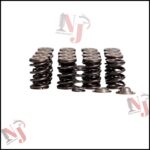
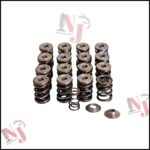
M52 M54 dual valve springs
M52 and M54 Dual Valve Springs — The Quiet Upgrade That Changes How the Engine Behaves
Pete had been running his E46 330i for three years before anyone mentioned dual valve springs to him. Not the guy who sold him the car. Not the first tuner who remapped it. Not even the second one.
He found out the hard way. Misfire above 5500 RPM, inconsistent power, one afternoon on a B-road that turned into a long conversation with a mechanic he actually trusted.
“Your springs,” the mechanic said. That was basically the whole diagnosis.
Single versus dual — why it’s not just a marketing thing
The M52 and M54 run single valve springs from the factory. One spring per valve. It works fine at stock power levels, stock RPM ranges, stock everything. BMW designed it that way for a reason — cost, NVH, longevity under normal conditions.
The problem is “normal conditions” and “modified engine” don’t really overlap.
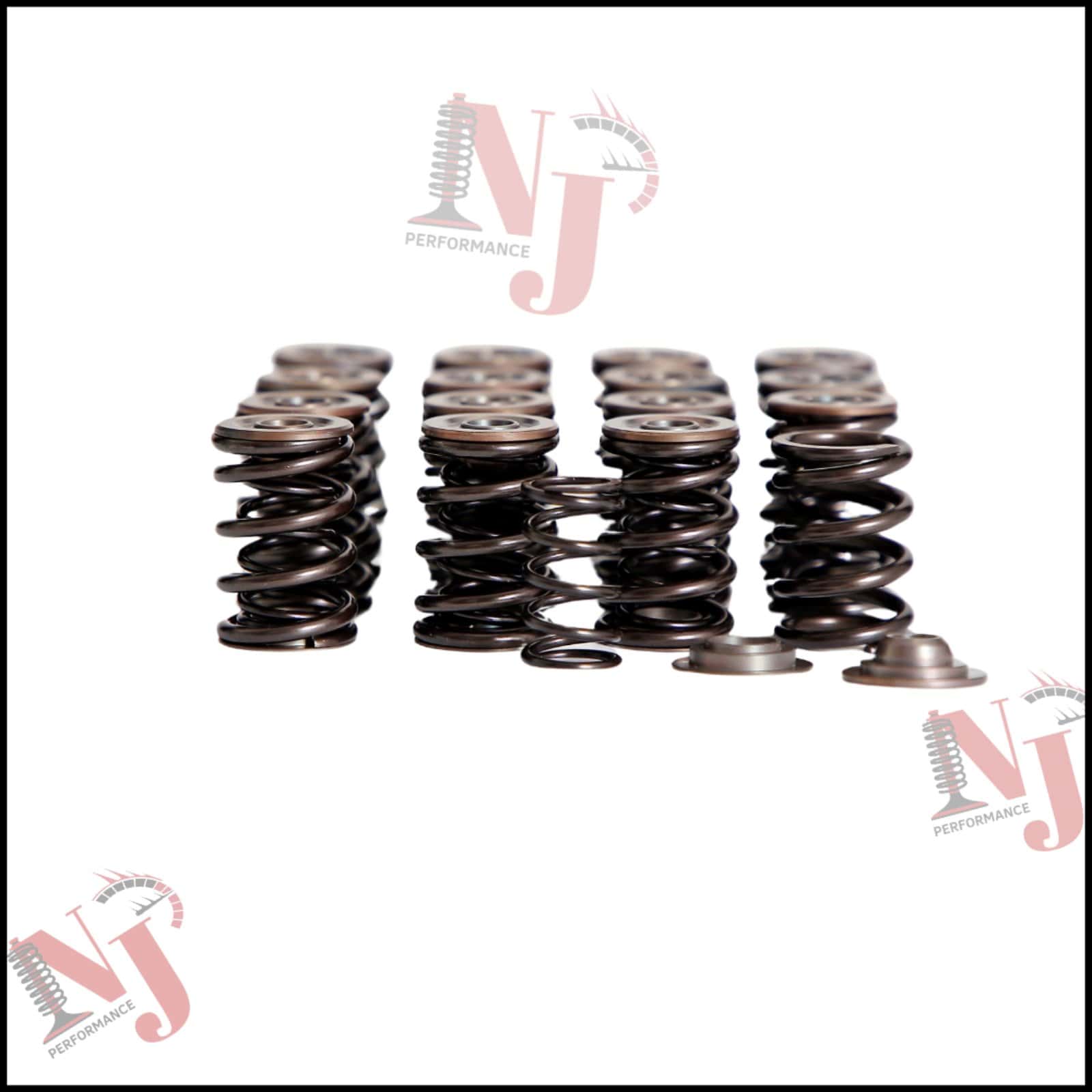
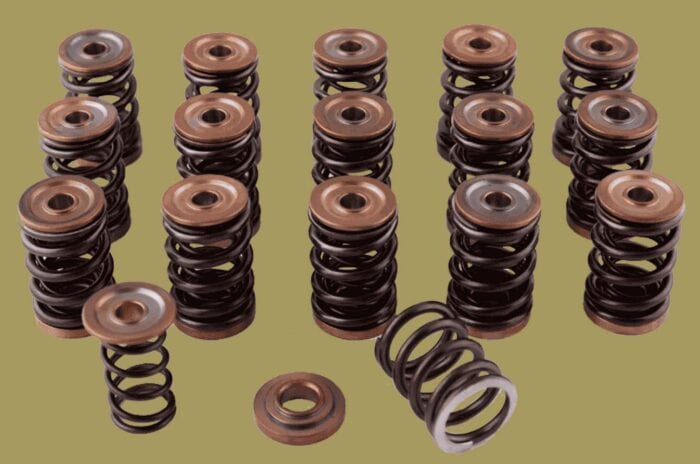
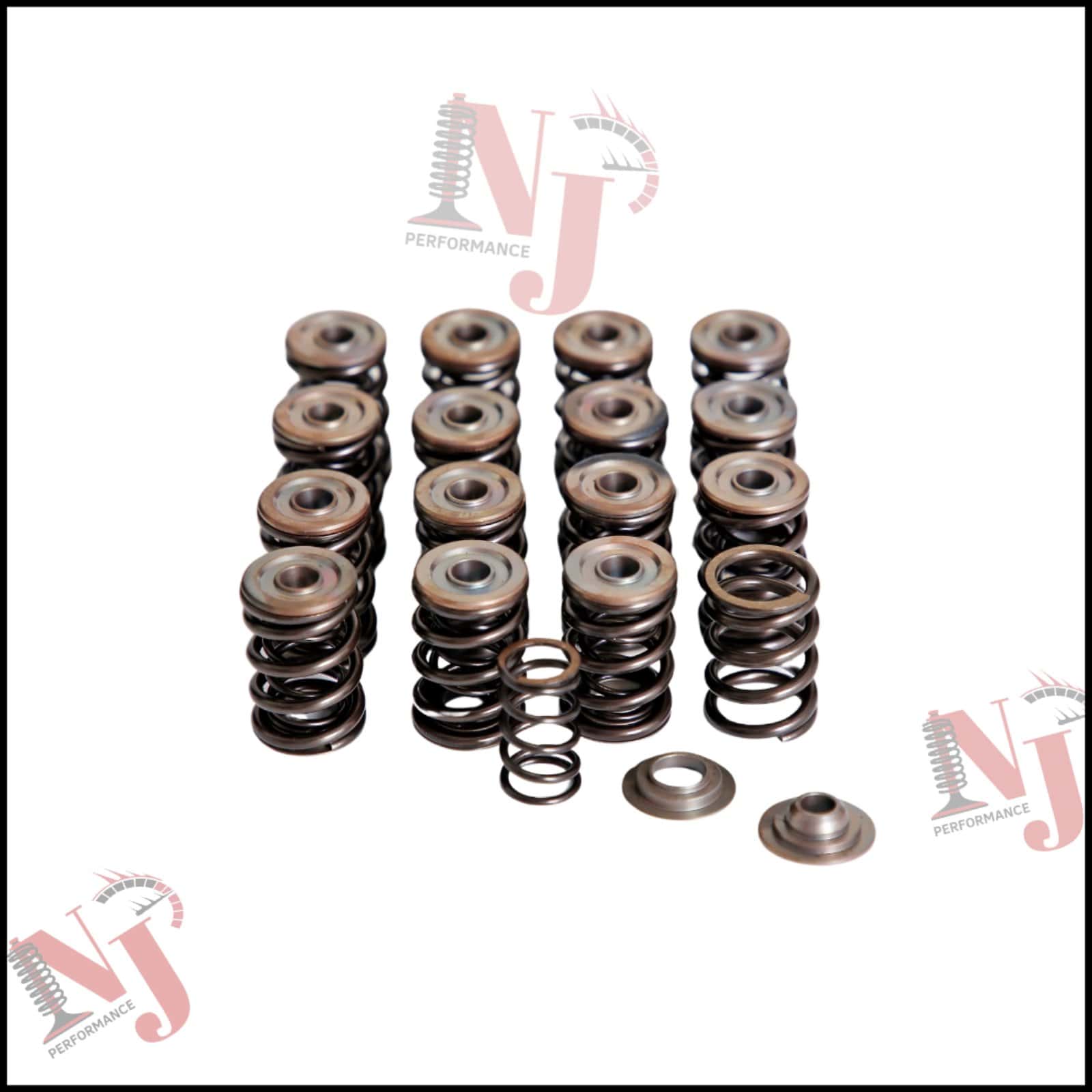
A dual spring setup adds a smaller inner spring inside the main one. The seat pressure goes up. The control at high RPM improves. The valve closes when it’s told to close, not slightly after, not intermittently, not “mostly.” The difference sounds small until you’ve experienced what happens without it on a cammed, tuned engine pulling hard past 6000 RPM.
Pete had experienced it. That’s why we were having this conversation.
Where people go wrong with the M52 and M54
These two engines are close enough that people treat them as identical. They’re not. The M52 came in 2.0, 2.5 and 2.8 variants. The M54 replaced it with revised geometry, different cam specs, updated head design. A spring kit that fits one doesn’t automatically fit the other — and some listings are vague enough that you only find out during assembly.
NJ Performance supplies dual spring kits matched to specific engine variants. Pete ordered for his M54B30. Right springs, right retainers, correct installed height. Not guesswork.
What the upgrade actually feels like
Pete’s words, not mine — “the top end stopped feeling nervous.” That was it. No dramatic power gain to report. The curve on the dyno looked cleaner above 5800 RPM and the odd hesitation he’d been chasing for months just… wasn’t there anymore.
He’d spent more money trying to fix that hesitation with other things before anyone looked at the springs.
Camshaft upgrade came six weeks later. With the dual springs already in, the cam had something proper to work against.
That’s usually the order it should go. Most people do it backwards.
Pete was one of them. He’d tell you himself.